

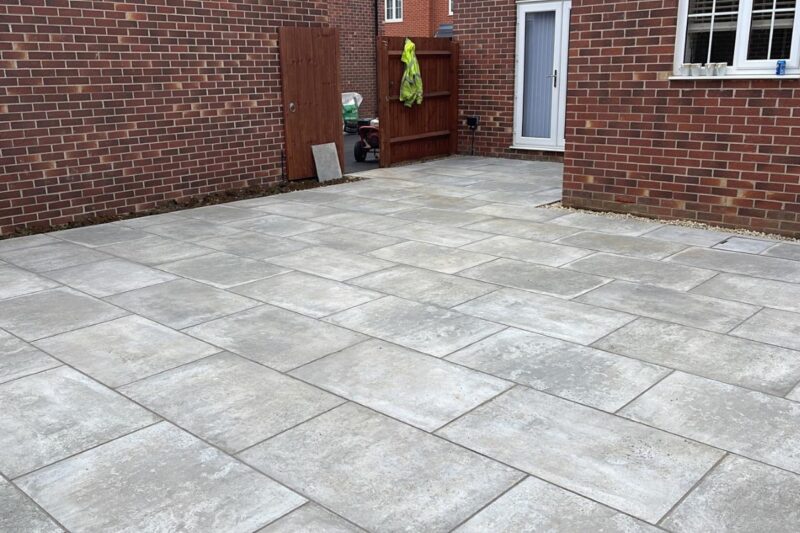
Buckingham Porcelain Patios
Outdoor porcelain is not the same product as an indoor bathroom tile. The porcelain patio slab is 20mm to 30mm, minimum R11 rated and since porcelain has a low water absorption, frost will not crack it, and once we have laid it on a solid bed of concrete and waterproof grouted it, you are guaranteed years of pleasure.
Porcelain soaks the sun and stays warm underfoot in summer, is available in multiple colours, styles and rated for outdoor patio use all year round.
We work in Buckingham and all the nearby villages and towns.
Patios, paths and step options
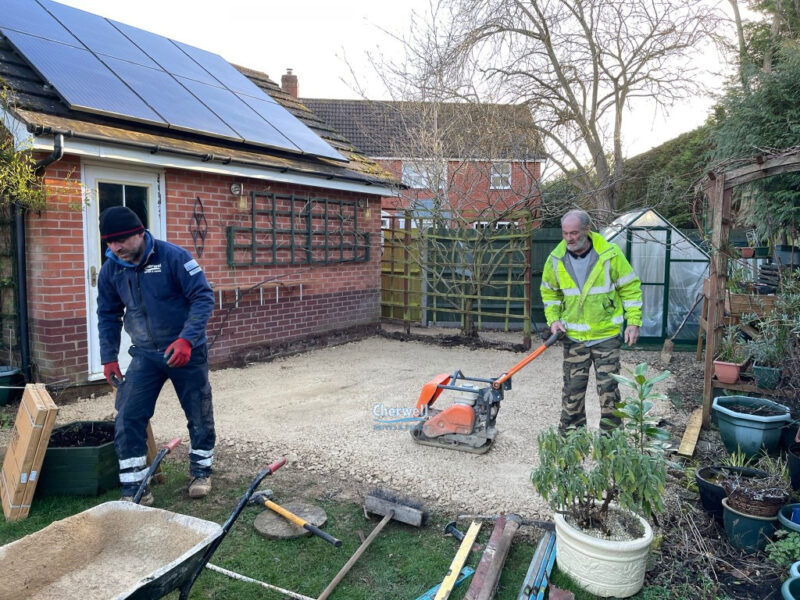
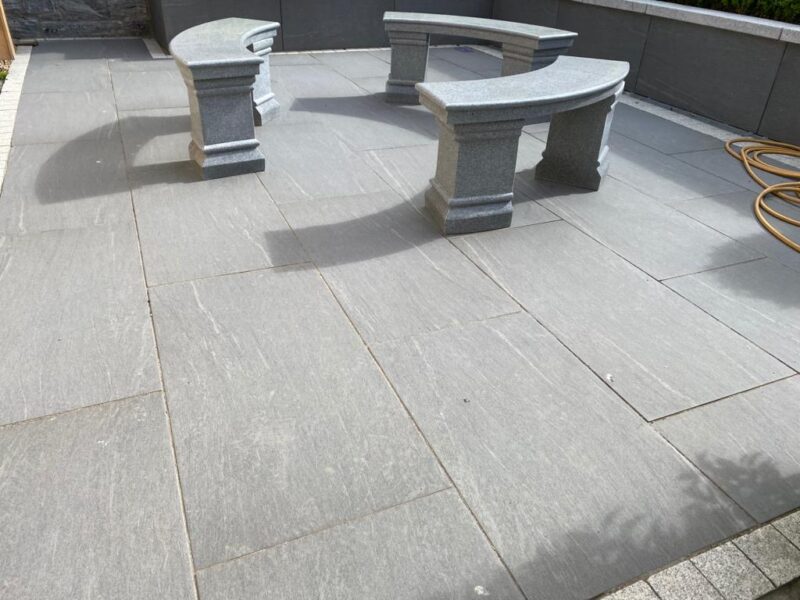
Our team can lay porcelain on patios and paths in Buckingham, along with steps. Most common sizes are 600x600mm and 900x600mm. Colour and finish are chosen from samples, because porcelain is man made and not limited the way natural stone can be in colour.
Steps on a porcelain patio are generally built in brick and capped with porcelain with every step edge needing a slight lip, so water drips clear rather than running down the face of the brickwork.
Why should you choose porcelain for your patio in Buckingham?
Porcelain is dense and vitrified, so it stays cleaner than most other slabs we lay in Buckingham, and warm soapy water and a soft brush is the only aftercare needed to keep it looking fresh.
It is nearly the most hard wearing patio surface with only granite patios being tougher, and porcelain comes in grades. However a smooth porcelain face can still be slippy when wet, depending on the finish of the porcelain tile.
How we lay our patios to avoid any long term problems
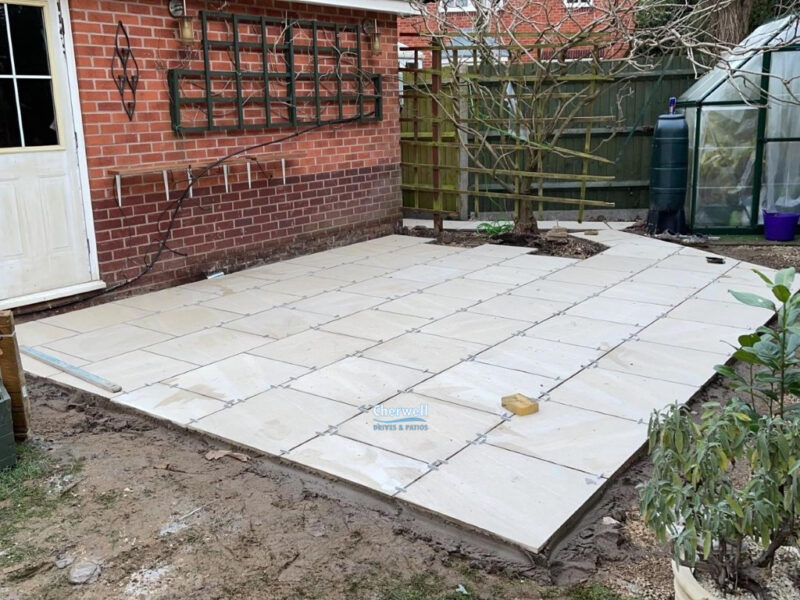
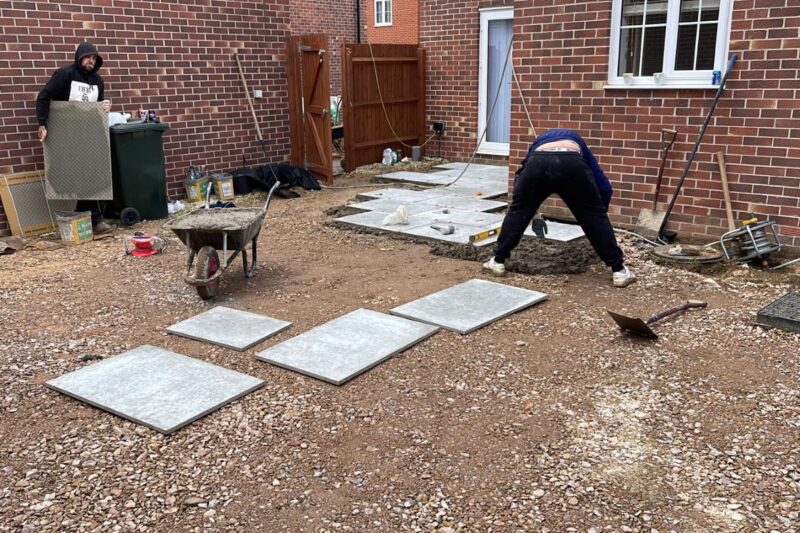
We always slurry prime the back of every porcelain tile instead of laying it onto mortar bare, because porcelain struggles to bond to concrete beds, the bed is semi dry to damp so the tile when being laid will still get a grip but firm enough that it can be walked on during the work.
We never dab porcelain as leaving hollow spots under the tile will let water sit, and hollow porcelain will be vulnerable to point loads. If you see sunken or cracked resin in the joints, or if you notice the grout dropping, then the joints were never tamped on initial fitting.
Stay off the resin grout for 24 hours or if possible 48 hours once we have laid it to guarantee your jointing is locked.
Bordering, grouting and levels
A border is recommended around any laid porcelain patio, except where it already runs into a wall, and the same tile in a different pattern gives a clean edge to cut into, as do cobbles or block paving.
Resin geofix or other epoxy brush-in is the joint on porcelain, we never use a standard cement joint with porcelain. The joint has to sit at 3mm at the tightest and 15mm at the widest (depending on the particular porcelain product).
Porcelain needs no taping for jointing when we point, because the face is sealed at the top. We will always wipe down the finished porcelain when we are done.
With porcelain, we will always set a fall of around 1:60 to make sure there is enough fall to direct water off the porcelain but level enough for tables, chairs to be sat out on it.
Free visit in Buckingham, call 01280 430126
Our patio team in Buckingham come to your home to survey the work. The visit is to see the access points, the old patio if there is one and excavation work, so the labour can be estimated.
We would love to talk you through the porcelain tiling option including joint colour options. We offer our estimates free, with no obligation and you can call us on 01280 430126 or by filling out our contact form.
See more examples of our patio work as porcelain is just one option among the styles of patio we lay which includes sandstone patios, limestone and more.
Questions we get asked about Porcelain
Does a porcelain patio need sealing?
No, and it should not be. Porcelain is dense and vitrified, so there is nothing for a sealer to soak into. Warm soapy water is all that is needed to keep your porcelain clean.
Can porcelain patio slabs be laid on sand?
No, you can lay concrete slabbing on sand but porcelain requires a solid, strong adhesive bond to stop it moving. However there is pedestal systems which allow for dry fitting and we can provide you examples of it.
Is porcelain better than natural stone?
Porcelain offers the widest variety of colours and styles, which means you can guarantee it will suit any home. Where natural stone wins is that it can be taken up and relaid again years later, something that is not possible with porcelain.